13 december 2018 · 22:39 · door Daniël Willaeys
De CHUCKLEBERRY
0 beelden 0 reacties
van Welsh Fruit Stocks
Vandaag ging een lang gekoesterde droom in vervulling. Eindelijk heb ik de plant. Een Engelse vriend van Paul Bekaert bracht die mee. Ze is al uitgeplant.
In het Berry Yearbook 2012 las ik over deze biologische plantenkwekerij (Organic sinds 2000) in de Radnershire Hills te Bryngwyn in Powys. (Wales). Het bedrijf ligt op 1100 Feeth (een kleine 400 m) hoogte. De rood-bruine leemgrond heeft een PH van 5,5 -5,8 ideaal voor kleinfruit. Ze kweken robuuste planten die later overal vlot weggroeien.
Dit jaar brengen zij een nieuwe plant op de markt: de Chucklebes. Dit is een nieuwe kruising (hybride) van 3 soorten: rode bes, kruisbes en Josta (op zichzelf al een kruising van zwarte bes en kruisbes.).
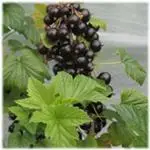
De plant groeit als een zwarte bes met een hoge opbrengst aan zwarte bessen. Ze rijpen midden juli.
Ze lenen zich voor het maken van een fantastische, rode confituur met smaken van de drie soorten vruchten.
Daarnaast zijn het smaakmakers voor ijsroom, cakes en voor verwerking in dranken.
Voor meer info: www.welshfruitstocks.co.uk
( 19/02/2012 Op blog FRUIT 1 )
The Chuckleberry has arisen as a result of crossing Redcurrant Rovada with Goosberry Pax to produce a seedling and Redcurrant Rovada with Jostaberry to produce another seedling. These two seedlings were then crossed with each other to produce the Chuckleberry. With high quality parentage disease resistance seems to be good.
Welsh Fruit Stocks Chuckleberry Growing Guide
The Chuckleberry is a new and very exciting addition to our fruit family, bred by Chas Welch in Norfolk who crossed a redcurrant with a gooseberry and Jostaberry (itself a hybrid of a gooseberry and blackcurrant).
The result is a high yielding blackcurrant-like bush - compact, with fairly straight shoots, growing on the growth from the previous year and also sending up new shoots from the base of the bush (the stool). The fruit is mainly produced on the wood from the previous year, so the bush should not be cut down each year, but pruned to remove older growth and to maintain fruit production.
The bushes we sell to gardeners are grown from our own PHPS certified cuttings. We plant these ourselves and grow them on throughout the summer, ready for despatch as one-year-old bushes when they are dormant between November and March/April.
Planting
Location and Soil
Research we carried out in 2014 showed that the majority of those planting the Chuckleberry in full sun or semi-shade and in a slightly sheltered location appear to have had the most success with growth and fruit, as did people who planted their bush in a pot. One gardener reported no fruit at all from a bush on a Northfacing, wind-swept hillside.
Chuckleberries will do well in most soils, but particularly enjoy a deep medium/heavy loamy soil, as they are quite deep rooting.
Preparation
Prepare the soil a month or so in advance of planting your Chuckleberry bushes. Incorporate some wellrotted compost into soil, and dig in to at least a spade’s depth. Prepare an area large enough to allow your bushes to be planted 4-5’ (1.2-1.5m) apart. Fertiliser may also be beneficial.
Planting Method
Dig the hole big enough to accept the roots without bunching or curling. Chuckleberry bushes can also be grown on a short leg (see Gooseberry bushes), or as a stool (see Blackcurrant bushes) if planting a oneyear-old bush. The branches of two-year-old bushes should be trimmed back to 3-4 buds, but leave one full branch to get a taste of fruit in their first summer. All the bushes should be firmed well in and watered. If it is very dry, continue to water until established.
Fruiting and Cropping
Pruning and Care
After planting, cut the shoots down to leave about two buds above ground level to encourage a strong root system to develop. Do not cut away any shoots the following winter. Chuckleberries mainly fruit on wood produced the previous year so don’t expect much fruit in the first year. In the third or fourth winter, cut some of the old wood out of the bush and any crossing or crowded shoots, to make room for new shoots the following year. As a general rule, it is best to cut out a third of the old wood each year, making the cut as close to the soil level as possible.
Pollination
Chuckleberry bushes are self-pollinating, so only one bush is needed. Ensure insects can access your bushes at flowering time to aid pollination.
Fruit Protection
Leave the fruit to ripen well before picking. Birds and small mammals also like Chuckleberries, especially when the berries are fully ripe. Try some bird scarers or netting to keep the birds off, or a fruit cage. Should a frost occur when they are in flower some protection will be necessary.
Pests and Disease
The main insect pests of Chuckleberry bushes are aphids, gall mite, leaf curling midge and sawfly. Gall mite causes the swollen bud of 'Big Bug' which carries the reversion virus and this severely affects the fruiting potential of the bush. If found, any large rounded buds should be removed in the late winter to help control the mites. Leaf curling midge will cause the top leaf of the shoot to twist and curl. If you see this in early summer it is best to pinch off the leaf and destroy the small larvae inside. We find garlic sprays help reduce insect problems.
Feeding and Watering
Keep the bushes watered in dry weather, especially during establishment or if they are planted in light or shallow soils, and control any weed growth around the bushes to prevent competition for water. Mulch the ground around the bushes annually to provide nutrients, prevent drying out, and to help control the weeds. A liquid foliar feed can be beneficial after fruiting, especially as they are such prolific fruiters.